
The operating logic of Tarot.
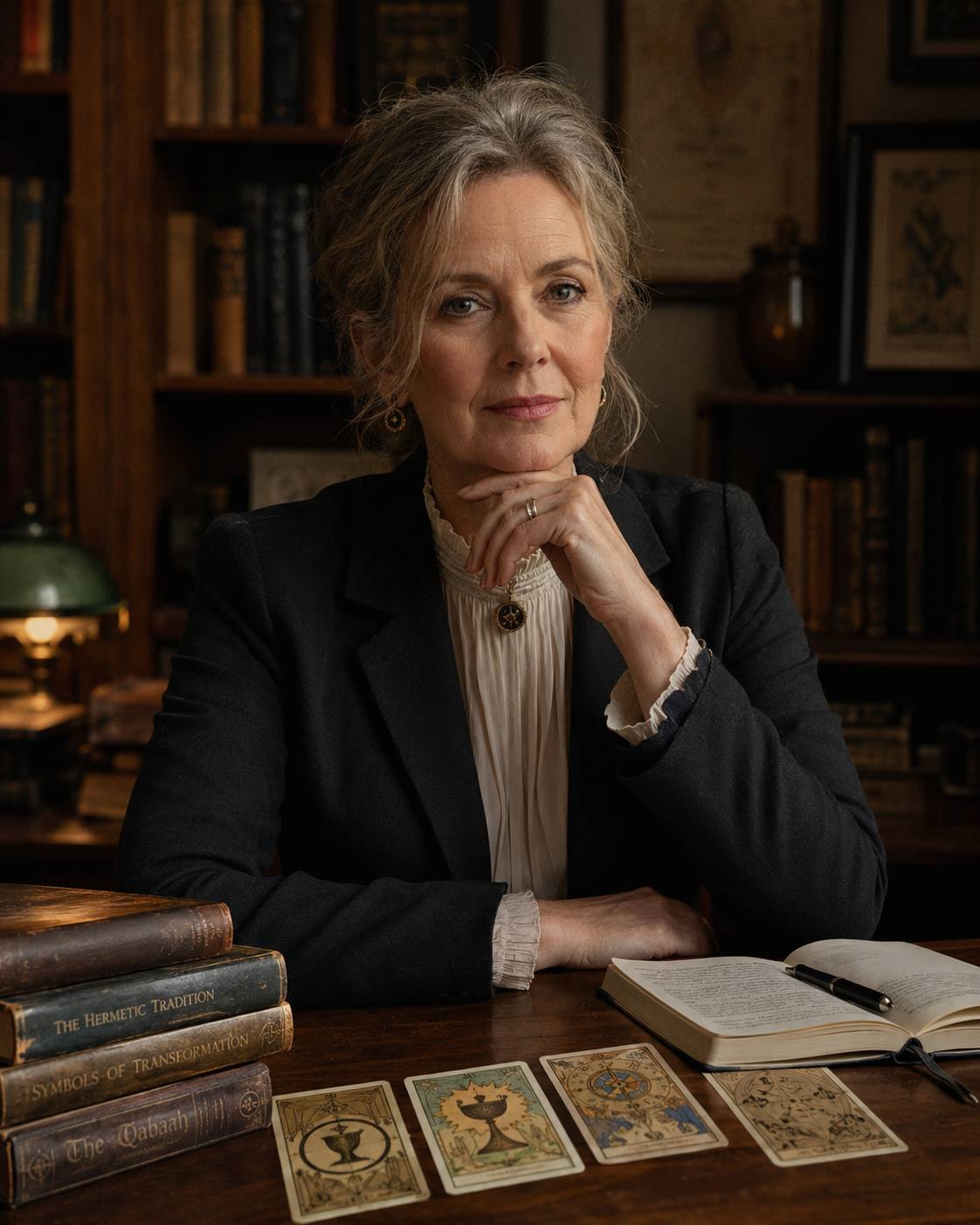
Before flipping through the exquisite tarot cards, we must first address a core question: How does tarot actually work?
If you think of tarot as a mysterious veil hiding an unchangeable fate, this book will guide you to view it from a different perspective. In modern life, tarot is more like a "mirror of the soul"; it does not decide your future, but it can help illuminate the blind spots you currently cannot see.
1 The Modern Definition of Tarot: A Tool for Inner Dialogue
Traditionally, tarot cards have often been seen as a divination tool for predicting the future, but in modern applications, we tend to define it as a "visual thinking navigation system."
In life, we often encounter situations where "the observer is confused," because our brains are accustomed to circling around the same logic. The emergence of tarot, through randomly drawn images, forces us to break free from habitual thinking and re-examine the current situation from a third-party perspective.
- Not a prophecy, but a map: Tarot does not tell you "what will inevitably happen"; it shows "what you might see if you continue on your current path."
- Catalyst for intuition: The colors, characters, and actions on the cards are designed to stimulate your intuition. Sometimes, the "first intuition" you have upon seeing a card is often the most genuine answer from deep within you, which has been suppressed by rationality.
2 Why is Tarot Accurate? Synchronicity and Projection
Many people wonder why the cards drawn at random can correspond to their current feelings. This can be explained through two interesting psychological concepts:
- Psychological projection: The cards themselves are neutral, much like a polygraph or psychological test. When you see a card, your brain automatically searches for information related to your current state. Your understanding of the card's meaning is actually a projection of your inner truth.
- Synchronicity: This is a concept proposed by the psychology master Carl Jung. He believed that external random events (drawing cards) and internal psychological states can create "meaningful coincidences" at a specific moment. Simply put, the card you draw is the message your soul needs at that moment.
3 The Art of Questioning: Asking the Right Questions Solves Half the Problem
The effectiveness of tarot reading largely depends on how you ask questions. A vague, evasive question usually only yields ambiguous answers.
Avoid "passive" questioning:
- "Will he come back to find me?" (This gives the decision-making power to someone else)
- "When will I get rich?" (This gives the decision-making power to time)
- "Is my fate good?" (This is too vague)
Use an "active" questioning framework:
A good question should focus on your "awareness" and "action."
- Example A: "I want to enhance my current career development; what potential challenges am I not noticing? How should I respond?"
- Example B: "In my current relationship, what can I do to improve the quality of communication between us?"
Three Golden Principles of Questioning:
- Specific and clear: Specify particular people, events, or time frames (it is recommended to limit to 3 to 6 months).
- Focus on self: Ask "What can I do?" or "How should I understand this matter?"
- Stay open: Allow tarot to provide you with "unexpected" suggestions, rather than just seeking psychological comfort.
Tarot is not superstition; it is a bridge for dialogue with yourself. Learn to calm your mind and accurately inquire within, and you will master this navigation system that guides the direction of your life.
Want to explore further?
Beyond knowledge articles, we offer professional divination services and free tools to help you understand yourself better.
Related Articles
- Modern Practical Scenarios and Applications of Tarot Cards - Relationships and Interpersonal Connections Edition
- How to understand the signals in a tarot spread?
- What basic tarot spreads are suitable for simple divination?
- The principles of public divination and interactive quizzes.
- Meaning - Coins Chapter (7~10 of Pentacles)