

The personality archetypes and system classification of the main star.
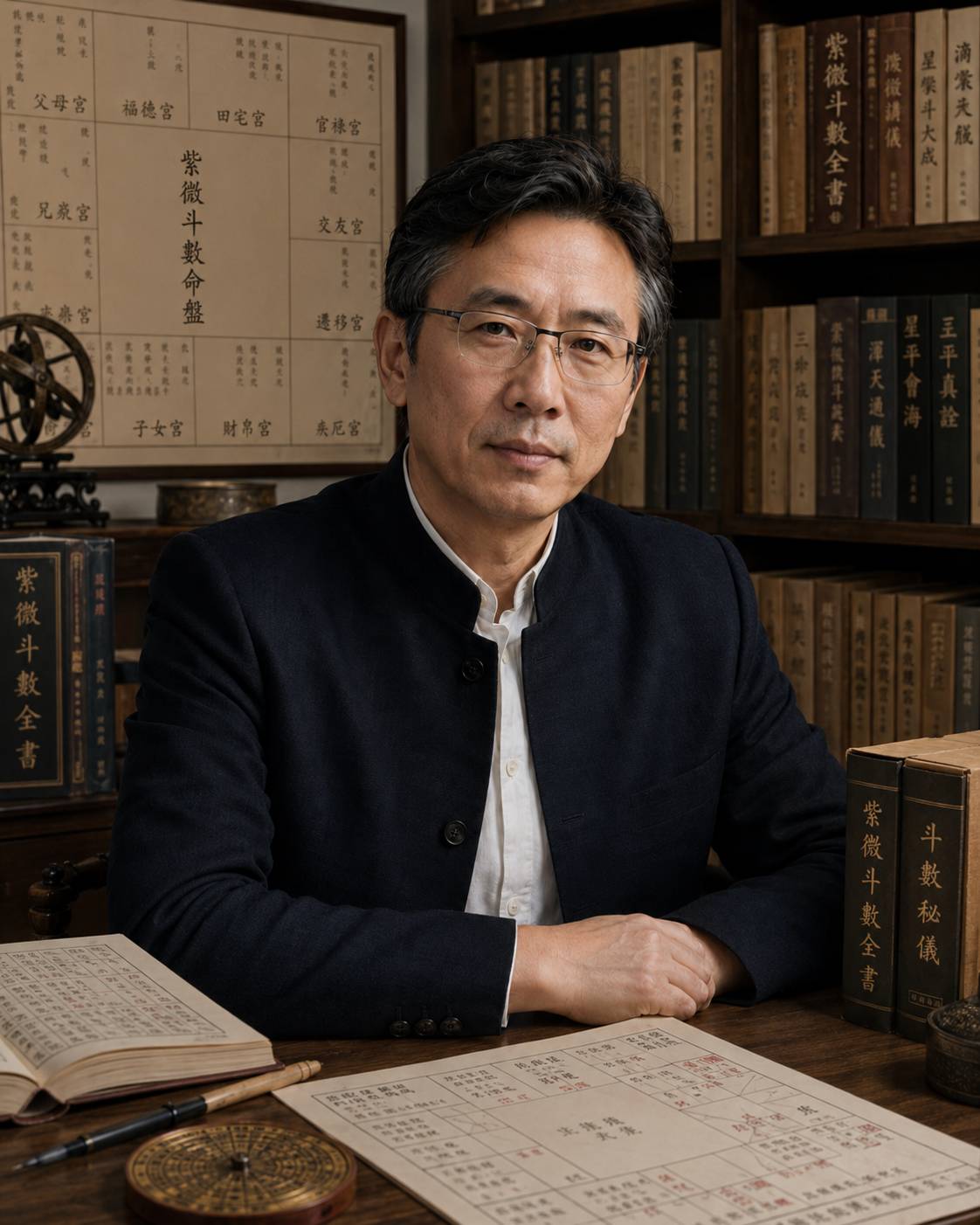
After establishing a foundational understanding of the palace structure, the next step is to delve into the core components of the Zi Wei Dou Shu system - the "stars." Zi Wei Dou Shu abstracts human personality traits and behavioral patterns into 14 main stars. In practical chart interpretation, the main stars represent the "essence" and "energetic tone" of a palace.
To facilitate systematic understanding, the 14 main stars are typically categorized into four major types: pioneering, leadership, supportive, and cooperative.
I. Pioneering: The Drivers of Action and Change
These stars possess strong, vigorous energy, characterized by high execution ability and competitiveness, but also come with a higher degree of volatility.
- Qi Sha Star: Represents extreme execution ability and a sense of isolation. Its behavioral pattern is goal-oriented, achieving tasks regardless of consequences, making it the most impactful dynamic in the system.
- Po Jun Star: Represents "loss" and "breaking the old to establish the new." Its energy is focused on overturning existing orders, possessing great destructive and creative power, leading to significant life changes.
- Lian Zhen Star: Exhibits political savvy and emotional attachment. It shows high self-discipline and competitiveness in career, while in relationships and interpersonal interactions, it carries strong defensiveness and complexity.
- Tan Lang Star: Represents desire and diverse talents. It has strong social skills and resource integration ability, making it the star with the most variables and adaptability in the system.
II. Leadership: The Power of Management, Order, and Stability
These stars emphasize control, rationality, and organizational structure, usually possessing strong social adaptability.
- Zi Wei Star: As the core of the system, it symbolizes nobility and leadership. Its traits include seeking completeness and coordination, but it also has weaknesses of arrogance and strong dependence on the environment.
- Tian Fu Star: Represents the treasury and stability. Its traits include conservatism and financial management, possessing excellent resource management skills, pursuing material security.
- Wu Qu Star: Represents decisiveness and stubbornness. Its energy leans towards calmness and practicality, with high sensitivity and execution ability regarding money and material acquisition.
- Tian Xiang Star: Represents coordination and assistance. Its traits include caution and balance, possessing strong documentation skills and image management, making it an ideal chief of staff and manager.
III. Supportive: The Output of Thought, Debate, and Strategy
These stars lean towards the mental aspect, excelling in analysis, planning, and communication, with high cognitive activity ability.
- Tai Yang Star: Represents benevolence and dedication. Its energy has high diffusiveness, emphasizing reputation and social status, with strong communicative power and enthusiasm.
- Ju Men Star: Represents observation, skepticism, and eloquence. Its essence lies in meticulousness and in-depth research of details, excelling in achieving goals through verbal expression or logical reasoning.
- Tian Ji Star: Represents wisdom and change. It has quick mental responses, excelling in strategic planning and technological development, but can easily become emotionally restless due to overthinking.
IV. Cooperative: The Maintenance of Emotion, Intuition, and Stability
These stars have a soft quality, emphasizing harmony, service, and emotion, with strong resilience and empathy.
- Tai Yin Star: Represents gentleness and accumulation. Its traits are introverted and emotional, possessing strong planning ability and family values, valuing the stability of the spiritual world.
- Tian Tong Star: Represents blessings and harmony. Its essence lies in pursuing comfort for the senses and spirit, with gentle traits, but can also show a lack of competitive drive.
- Tian Liang Star: Represents protection and principles. It embodies the demeanor of an elder and a strong sense of responsibility, excelling in handling legal, traditional, or redemptive matters.
V. Practical Interpretation Logic: Classification and Interaction of Stars
In conducting practical analysis, readers should pay attention to the following two levels of judgment:
-
Balance of Rigidity and Flexibility in Patterns: Observe the combinations of stars in the life palace and their three external and four cardinal positions. If all are "pioneering," life will be impactful but arduous; if all are "cooperative," life will be stable but with a smaller scope. A quality life chart typically possesses a moderate balance of rigidity and flexibility.
-
Compatibility of Stars and Palaces: If the essence of the stars aligns with the functional roles of the palaces, the energy will be expressed more smoothly. For example: Wu Qu (wealth star) entering the wealth palace is considered "in position"; Tian Tong (blessing star) entering the official palace may exhibit a lack of ambition in the workplace.
The 14 main stars are not merely personality descriptions but represent the "initial parameters" of life. Understanding the essence of these archetypes allows readers to further integrate "temple prosperity and decline" and "four transformations" in subsequent teachings, determining what qualitative and quantitative changes these essences will undergo in specific time dimensions (major fortunes, annual cycles).
Want to explore further?
Beyond knowledge articles, we offer professional divination services and free tools to help you understand yourself better.
Related Articles
- Is it really true that having a fallen Moon means "a lifetime of hard work, unpredictable fortunes, and a lack of connection with female elders"?
- Is the Earth-Air-Earth calamity in the Wealth Palace a hole in the treasure store or an anti-traditional wealth code?
- Zi Wei Dou Shu - Characteristics of a Partner and Timing for a True Relationship
- Stacking Palace Practical Techniques - Accurately Reading the Details of Life Scripts
- Spatial Interaction Logic - Triangular Quadrants and Social Competitiveness